
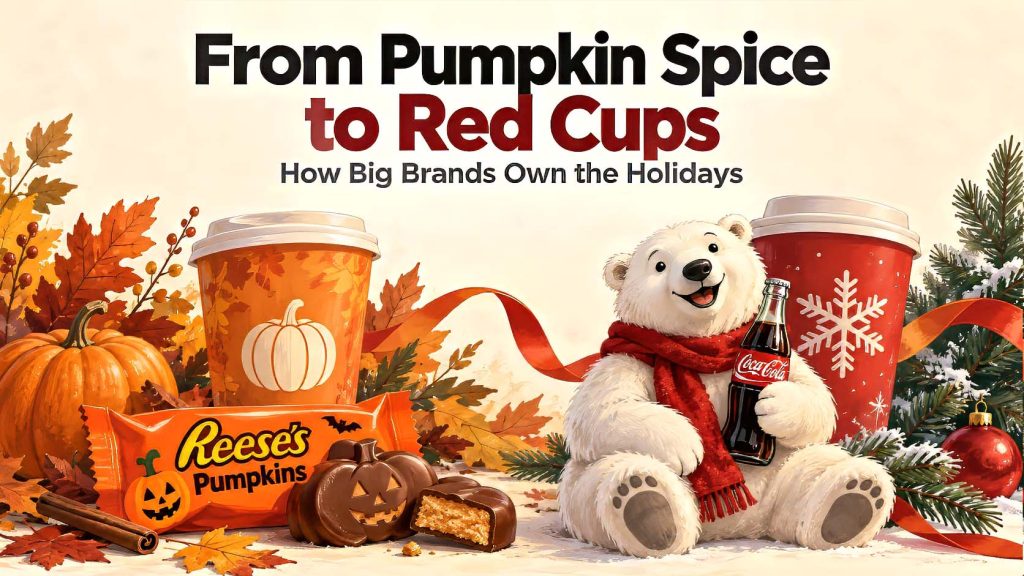
Key takeaways: The most successful holiday marketing doesn’t chase the season; it becomes part of it. Brands like Starbucks, Coca-Cola, Mars, and Twix build traditions through repetition, a recognizable signal, limited-time returns, and emotional storytelling. In 2026, the season starts earlier than ever: Halloween campaigns began in May, and the first Christmas ads arrived in mid-October.
The season starts before the season
In holiday marketing, the smartest brands don’t advertise during the holidays. They become part of how people know the holidays have arrived.
Think about it. For millions of people, autumn doesn’t officially begin with the equinox. It begins the day pumpkin spice returns to the menu. Christmas doesn’t start on December 1st. It starts when a certain red truck rolls across the TV screen, or when coffee comes in a red cup.
That is not luck. It is decades of deliberate, patient brand building. And between mid-October and late December, we get to watch the masters at work.
 Halloween marketing: brands that turned a flavour into a ritual
Halloween is the warm-up act. It is shorter, more playful, and more forgiving, making it the perfect testing ground for seasonal brand ideas.
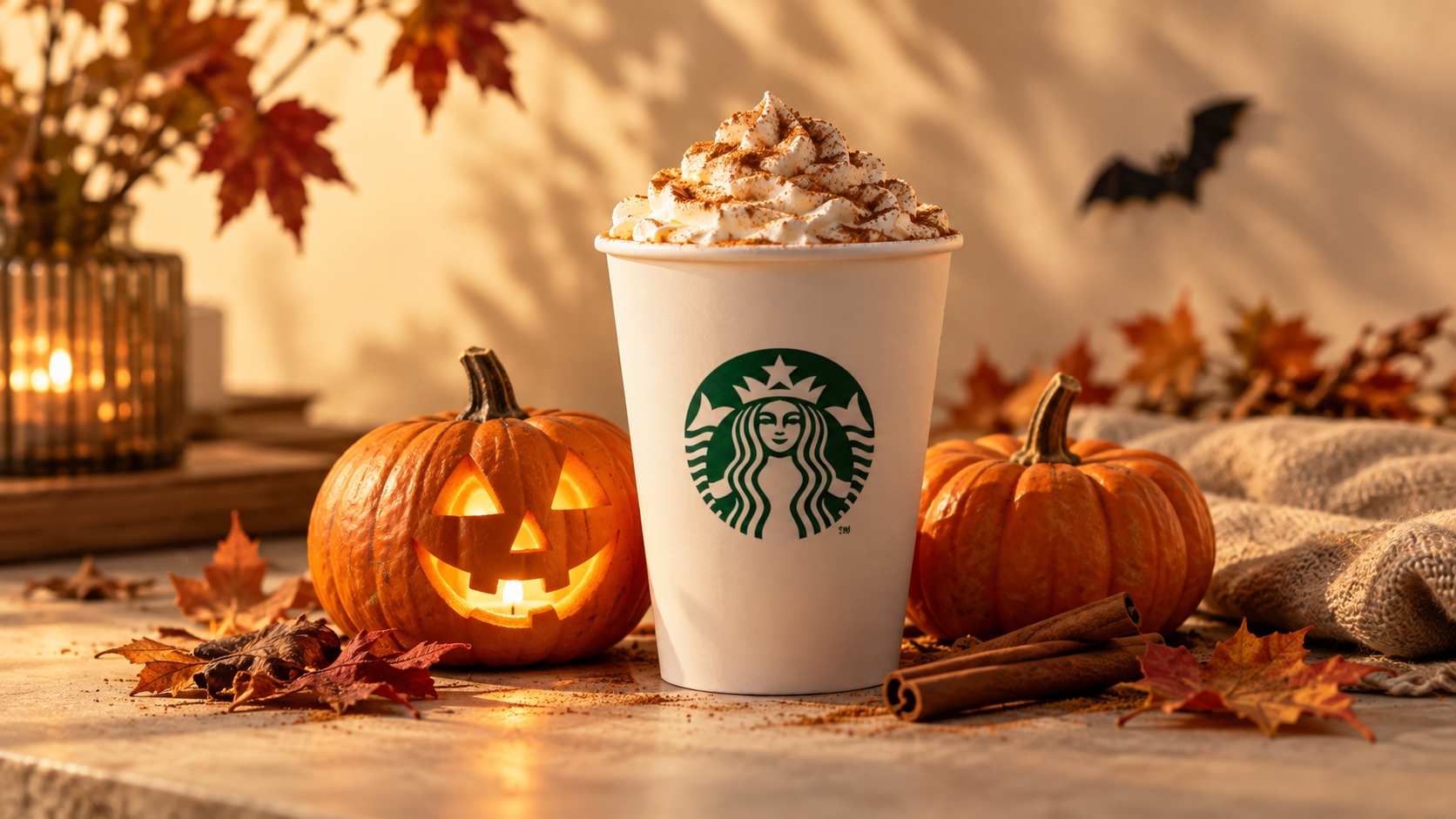
Starbucks Pumpkin Spice Latte. Launched in 2003 as a seasonal test, the PSL became something bigger than a drink. It became a cultural signal. Every year, the “PSL is back” moment arrives a little earlier, and people talk about it, joke about it, and line up for it. The product is limited, the return is predictable, and the anticipation does the marketing.
Reese’s Pumpkins. Same peanut butter cup, different shape. That’s it. Yet the seasonal shape has fans who wait for it, compare it to the original and post about it every October. A small design change created a tradition people actively look forward to.
Spirit Halloween. A store that appears in empty retail spaces in late summer and disappears in November. Its sudden arrival has become a meme and a seasonal marker in its own right. The brand understood that scarcity and timing can be more powerful than permanence.
The common thread: none of these brands tried to own Halloween. They owned a small, repeatable moment inside it.
Christmas marketing: when the brand becomes the tradition
If Halloween is the warm-up, Christmas is the main stage. Budgets are bigger, emotions run higher, and the brands that win here play a very long game.
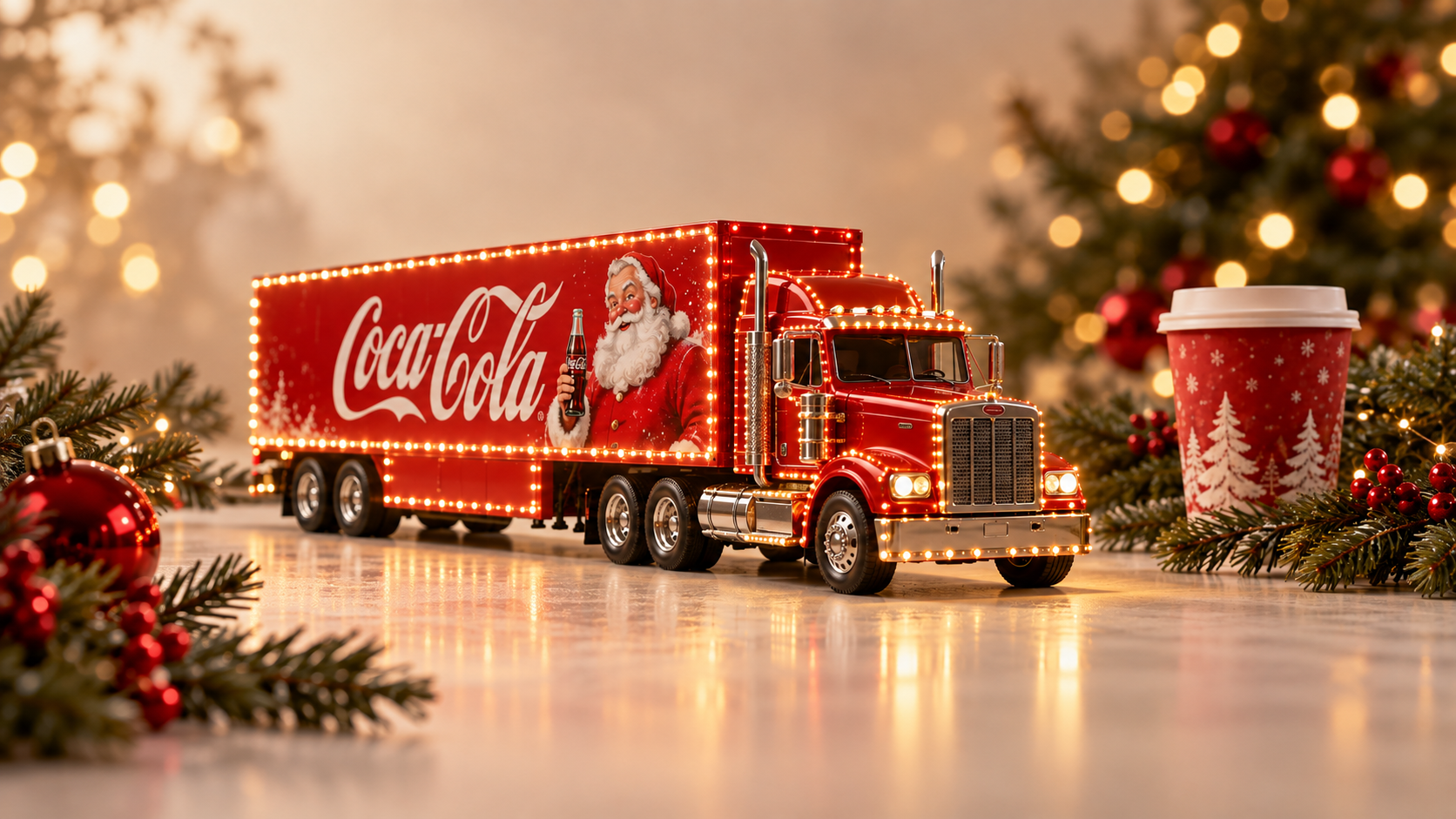
Coca-Cola. In 1931, Coca-Cola commissioned illustrator Haddon Sundblom to paint Santa Claus for its holiday ads. His warm, jolly, red-suited Santa ran for decades and shaped how much of the world pictures Santa today. Then, in 1995, came the “Holidays Are Coming” trucks. Thirty years later, for many families, the trucks still mark the start of the season. Coca-Cola didn’t sponsor Christmas. It helped design its imagery.
John Lewis (UK). Since 2007, the British retailer’s Christmas ad has become a national event. People wait for the release, debate it, and judge it like a film premiere. The formula is emotional storytelling with almost no product, and the payoff is a full season of earned media and conversation.
Starbucks red cups. Introduced in 1997, the holiday cup now generates its own news cycle each November. A paper cup became a seasonal announcement that customers share for free.
These brands understood something essential: a tradition is a promise kept every year. Consistency is what turns a campaign into a ritual.
Holiday marketing trends 2026: the season keeps starting earlier
This year shows where holiday marketing is heading: brands are no longer waiting for the calendar. They are creating their own seasonal moments, months ahead.
Halloween in May. Mars kicked off its 2026 Halloween portfolio on May 6 with its third annual “Halfway to Halloween” event, featuring more than 120 products from M&M’s, Skittles, Snickers and Twix. A date nobody celebrated three years ago is now a branded tradition of its own.
Halloween décor in July. The Home Depot put its 2026 Halloween collection online on July 16, presenting it as a product event with new oversized characters and returning fan favourites. The giant skeleton has become an annual “is it back?” moment.
Pumpkin spice in August. Starbucks brought the PSL back on August 25 and added a “PSL Society” merchandise line with drinkware and a hat. The drink is now a fan club.
Halloween meets Christmas. Twix brought back its Zombie Claus for a second year, mashing both holidays into “Hallowmas.” Fanta is building a recurring “Haunted Universe” content platform, and Pringles gave its classic “Once You Pop” line a spooky twist. Each one is a brand building a repeatable seasonal asset, not a one-off ad.
Christmas in mid-October. In the UK, Debenhams became the first retailer to release its 2026 Christmas ad, “Christmas. For Everyone,” in the middle of October. The race to be first is now part of the strategy.
The lesson: the brands that win the holidays don’t just show up for them. They expand the season, and then they own the moments inside it.
The holiday marketing playbook: 5 principles behind brand traditions
Look closely and the same five principles appear again and again:
- Repetition over reinvention. The trucks, the cups, the shapes return every year. Familiarity is the asset. Each new campaign adds to the story instead of starting over.
- A recognizable signal. A colour, a sound, a shape or a single product becomes shorthand for the season. When people see it, they feel the holiday before they think about the brand.
- Limited time, guaranteed return. Scarcity creates urgency. Predictability creates anticipation. Together they create a ritual.
- Emotion before product. The best holiday work sells a feeling: togetherness, nostalgia, generosity. The product is simply the way in.
- Let the audience carry it. Unboxing posts, “it’s back!” memes, ad reviews and debates. Great seasonal brands design moments people want to share.
Holiday marketing ideas small businesses can borrow
You don’t need a Coca-Cola budget to build a seasonal tradition. You need consistency and a clear idea. A few ways to start:
- Pick one moment and own it. A seasonal product, a limited packaging design, an annual customer event, or a yearly charity drive. One thing, done every year.
- Create a visual cue. A holiday version of your logo, a signature colour, or a packaging detail that customers learn to expect.
- Announce the return. Make “it’s back” part of your calendar. Anticipation is free media.
- Tell a local story. Big brands talk to the world. You can talk to your neighbourhood, and that intimacy is an advantage.
- Use AI and data to sharpen, not replace, the idea. Past sales and engagement data show when your audience starts thinking about the season. AI tools can help personalize offers, test creative variations, and time campaigns precisely. The tradition itself, though, still has to come from a genuinely human idea.
Start this year. In three years, your customers will be waiting for it.
Traditions are built, not bought
The brands we associate with Halloween and Christmas didn’t get there with one brilliant campaign. They got there by showing up the same way, at the same time, year after year, until customers made them part of their own celebrations.
That is the real holiday marketing lesson for every brand: the strongest brand equity is built on rituals people choose to repeat.
Thinking about building a seasonal tradition for your brand? At Creative At Work, we help brands turn campaigns into moments customers look forward to. Let’s talk.
Holiday marketing FAQ
What is holiday marketing?
Holiday marketing is the seasonal promotion a brand runs around holidays such as Halloween, Black Friday, and Christmas. The strongest version goes beyond discounts and builds recurring moments customers look forward to every year.
Why do brands start holiday marketing so early?
Being first earns attention before the market gets crowded. In 2026, Mars launched its Halloween range in May, The Home Depot put Halloween décor online in July, and Debenhams released its Christmas ad in mid-October.
Which brands have turned holidays into traditions?
Coca-Cola (its Santa imagery since 1931 and the holiday trucks since 1995), Starbucks (the Pumpkin Spice Latte since 2003 and red holiday cups since 1997), John Lewis (its annual Christmas ad since 2007), and Mars with “Halfway to Halloween” are among the best-known examples.
How can a small business build a holiday marketing tradition?
Choose one repeatable moment, such as a seasonal product, limited packaging or an annual event. Give it a recognizable visual cue, announce its return every year and keep it consistent. Familiarity grows with each season.
When should a small business start its holiday campaign?
A practical rhythm is to plan in late summer and launch seasonal content four to six weeks before the holiday. Starting earlier makes sense when your audience already shops early.
Sources and further reading
- Why are major brands already marketing Halloween? (The Shelf)
- The 2026 Halloween ads worth screaming about (Adweek)
- Starbucks reveals Pumpkin Spice Latte return date for 2026 (FOX)
- The Marketing Week Christmas blog 2026
- Debenhams reveals 2026 Christmas ad (Retail Gazette)
About the author
Mimi Stefanovska is a brand and marketing executive with 20 years of international leadership experience across North America and Europe. As founder of Creative At Work Advertising Inc., recognized among the Top 3 agencies in Oakville, Ontario, for nine consecutive years, she has worked with brands including Papa John’s, Kraft Foods, Mazda, and Kia. She holds a Master’s in Applied AI Studies in Marketing and writes about brand building, marketing strategy, and AI.
Let’s put these ideas to work on your brand.